
It’s 1978. The original Star Wars has been in theaters for over a year, a shocking box office and cultural phenomenon. A sequel is in the works, but that’s two years away.
Success, especially of this scale, wasn’t a part of the plan. 20th Century Fox and the Star Wars Corporation, soon to be named Lucasfilm, feared that it might be short-lived. They needed to come up with something new to keep audiences engaged, or else, they may lose them.
Faced with this dilemma, the CBS braintrust suggested an idea: a Star Wars variety television special. Early attempts at the format proved successful, meaning George Lucas and company were all aboard for the concept.
Lucas, deep in the weeds on Empire Strikes Back — which, of course, became one of the most remarkable sequels of all time — could not dedicate time to directing the project. Instead, he offered the backbones of a story, one centered on the Wookiees, and handed CBS the keys to the young Star Wars franchise.
Two directors, countless rewrites and one million dollars later came The Star Wars Holiday Special, aired live on CBS to millions of households across America on November 17, 1978.
Those two hours have since become the forbidden fruit of Star Wars lore, never to be re-aired in the United States again.
–
As a result of all that, I had never seen The Star Wars Holiday Special.
When the Paley Center for Media — where I’ve worked for many years now — pulled the special out of its archive for a screening on Sunday, December 7, I was determined to attend.
With a screening of the special as seen on the West Coast in 1978, and a tremendously entertaining conversation with host of The George Lucas Talk Show, Connor Ratliff, I’ve come to understand the mythos behind the special and more importantly, the stage that it set for the wacky wonder of Star Wars that has unfolded in the decades since.
–
For those who have not seen it, the lucky ones, The Star Wars Holiday Special tells the tale of Chewbacca’s quest to return home to his family for the celebration of Life Day, a holiday commemorating the natural beauty of the Wookiee homeworld, Kashyyyk.
In theory, this was a promising idea. Lucas had interest in exploring the Wookiees deeper, and as we’ve come to see, concepts never really die in Star Wars. One such version of the original film was to position it as a bedtime story Wookiees passed to their children.
And, when it comes to the holidays, nothing says festive quite like a big, furry Wookiee.
Lucas committed to this concept as the central plot, clearly implying the special was not meant to be a high-flying, daring adventure comparable to Star Wars. In fact, the special doesn’t include much of any real violence or consequence at all.
Steering away from action, a variety show became the next best suggestion.
This may sound wildly out of left field today, but at the time, it was quite the opposite. From the beginning, George Lucas enjoyed having fun with Star Wars. Popular shows of the era, including Donny & Marie and The Richard Pryor Show, happily spoofed it with Lucas’ approval. I highly encourage watching those clips. Yes, they are real segments that aired on television.
Star Wars has a sense of sanctity today, but originally, that was not the case. Lucas owned key aspects of the franchise, such as the rights to sequels, and, notoriously, licensing and merchandising. That aside, Star Wars was a loose cannon that could be aimed in any direction.
One of those directions, variety shows, became a hit. These segments attracted television viewers and resulted in a tangible boost in box office sales for the film, which never really left cinemas from its initial release in May 1977 until the fall of ‘78.
All of that context is key to understanding how the core idea of The Star Wars Holiday Special came to be, and why a variety show, at the time, made a great deal of sense. However, as is often the case, the right ideas don’t always yield great results.
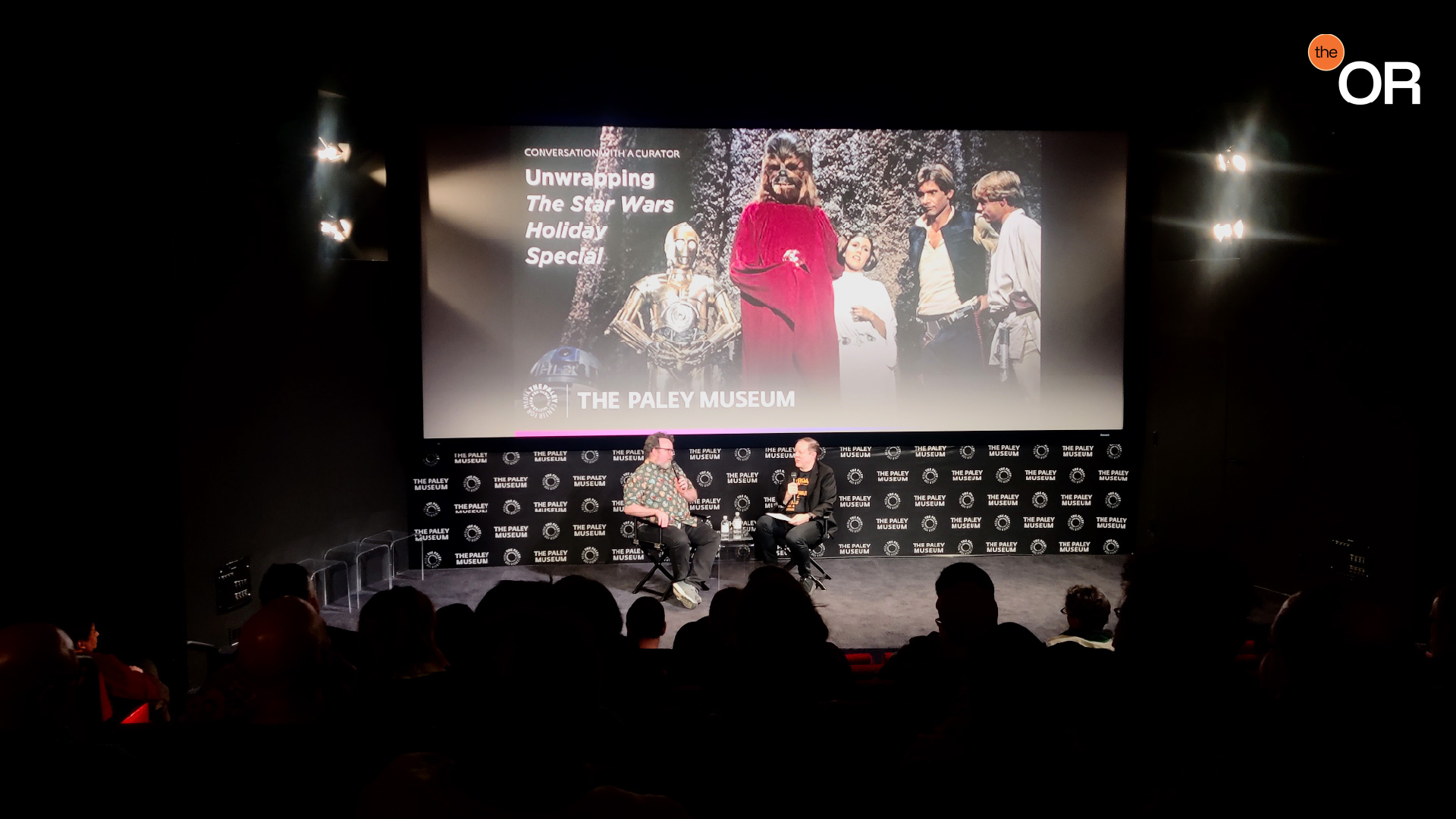
Watching The Star Wars Holiday Special for the first time in 2025 is a surreal experience.
Even with this background knowledge and a week of digestion, it is still hard to comprehend the film’s many vignettes, especially because they are part of a canonical story. Ratliff, who had me in tears during the post-screening Q&A, joked that the audience is expected to believe these are the first events happening in Chewbacca’s life following the events of A New Hope.
There is the Julia Child-esque cooking show, Jefferson Starship’s hit single, Diahann Caroll in a scene far too suggestive for a family audience, and a whole lot of Wookiee household chores.
Understanding that the special is a zany compilation of Star Wars outtakes, I was unprepared for how ridiculous and, frankly, boring the entire thing is. So much so that the special’s most exciting scenes are the commercial breaks.
Those commercials, ranging from the ever-popular line of Kenner toys to what’s coming up next on CBS, are not only a humorous blast to the past, but a means of grounding the special in the era it belongs in rather than the one of today, where a single television ad rivals the cost of the entire special itself.
1970s television was a wild place. Songs popped up everywhere, even in an International Ladies Garment Workers’ Union advertisement, helping explain a bit of Princess Leia’s vocal hijacking of the Wookiees’ Life Day celebration. Mascots like the Brawny Man and the Green Giant dominated consumer households, and CBS aired the short-lived Flying High, a risque comedy whose only plot seemed to be getting people to take off their pants.
With those commercials, The Star Wars Holiday Special begins to look like more of a product of its time rather than something so far outside of it. That came as such a surprise, though, because Lucas’ Star Wars was so far ahead of its time. In some ways, the special was too.
The special is the first crack at a Star Wars spinoff, a formula that Disney has used to tremendous success with the Rogue One mini-universe. Kashyyyk lived on, serving as the backdrop to Revenge of the Sith and recent stories in books, games and television shows.
Then, there is the animated skit. Written by Lucas and produced by Nelvana, those few minutes capture much of the Star Wars magic. As the franchise’s first cartoon, it showed early signs of the saga’s success in animation. Similar visual styles can be seen in 2003’s Star Wars: Clone Wars, and more recently, Visions.
The cartoon also introduces Boba Fett, who, funny enough, makes his grand entrance riding a large creature, just as he does in The Book of Boba Fett.
Speaking of the Mandoverse, Life Day received a shoutout in an episode of The Mandalorian. It’s become something of a holiday in the real world, too, widely celebrated on the official Star Wars social media accounts. Furthermore, the Wookiee robes worn at the end of the film, only used due to a lack of budget — the special could only afford Wookiee heads, not the whole costume, by the end of production — have inspired Funko Pops and action figures.
The dance routine that Lumpy watches in the special’s opening moments appeared in another Disney+ series, Skeleton Crew. And, LEGO, whose games often poke fun at Star Wars, did its own version of a holiday special a few years ago.
–
This all points to the fact that Star Wars, across a number of different mediums, now embraces the sort of wackiness that the holiday special introduced. As the leading example of that, Adam Driver’s SNL skit is exactly what a modern-day Star Wars spoof looks like.
And, as it so happens, all of this works so well. Because Star Wars actually happens to be quite a good fit for the variety medium. It may not have worked out in 1978, at least not in the way many people hoped. However, the idea had merit, and certain aspects of it really worked.
For years, Lucasfilm suppressed The Star Wars Holiday Special. It never re-aired domestically, Lucas disparaged it and actors ignored its existence. Yet, of all people, Disney has been the one leading a change on this. They could remove every copy of it in an instant, and yet, a full airing of the special sits readily available in the YouTube search results.
Rather than ignore it, Disney has begun to quietly acknowledge The Star Wars Holiday Special as an essential part of lore. That is a tremendous testament to the countless people who worked on the project and helped bring it to life.
–
Above all, though, The Star Wars Holiday Special set the right tone for Star Wars, positioning it as a sandbox for fun rather than an untouchable museum artifact.
Ratliff mentioned an incredible point that had never occurred to me. The special is just the second piece of Star Wars media to ever come into existence. If Star Wars’ sophomore outing was this poorly received, how could fans possibly take things too seriously from there?
The special immediately lowered the stakes, and proved a trend that has continued to be true to this day. Some Star Wars will be really good. Some of it will be terrible. But it’s all still Star Wars.
Ratliff put it best. “Good ideas. Bad ideas. George Lucas.”
That’s The Star Wars Holiday Special in a nutshell. Only Lucas could have a hand in something quite like it. More simply, it’s Star Wars itself. And I wouldn’t have it any other way.
Leave a Reply